
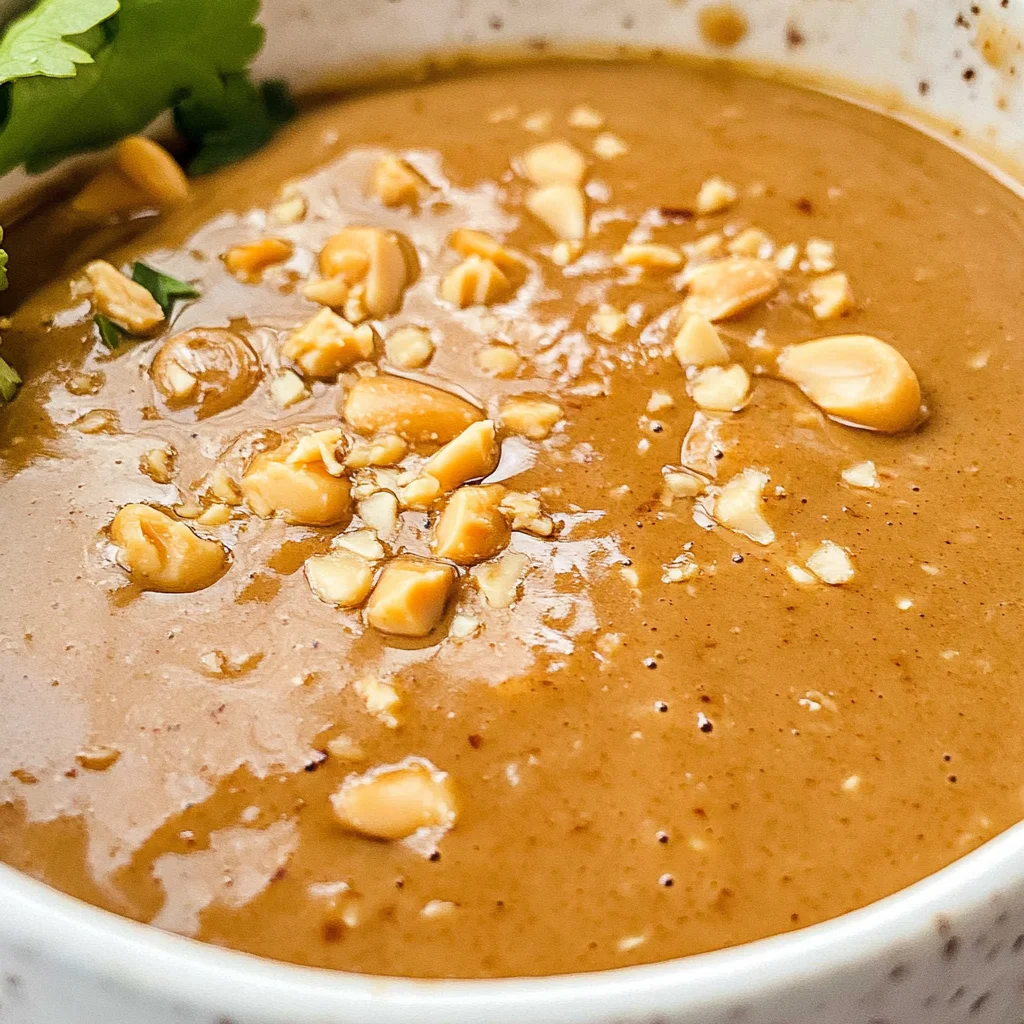
This Peanut Sauce recipe is a delicious and versatile addition to your culinary repertoire. Creamy and smooth, it’s bursting with flavors from ginger, garlic, and sesame oil. Ideal for drizzling over noodles, refreshing salads, or serving as a delightful dipping sauce for spring rolls, this sauce is sure to impress at any gathering or weeknight dinner.
Why You’ll Love This Recipe
- Quick to Prepare: With only five minutes of prep time, you can whip up this sauce in no time.
- Flavor Packed: The combination of ginger, garlic, and sesame creates a rich taste that elevates any dish.
- Versatile Use: Perfect for noodles, salads, and as a dipping sauce for fresh spring rolls.
- Healthy Option: Made with wholesome ingredients like peanut butter and coconut milk, it’s a nutritious condiment choice.
- Customizable Heat: Adjust the level of spiciness by adding or omitting red pepper flakes according to your preference.
Tools and Preparation
Having the right tools can make preparing your Peanut Sauce even easier. Here are some essential items you’ll need:
Essential Tools and Equipment
- A clean jar with a lid
- Immersion blender or food processor
- Measuring cups and spoons
- Grater
Importance of Each Tool
- Clean jar with lid: This is vital for mixing your sauce ingredients thoroughly and for storing leftover sauce safely.
- Immersion blender or food processor: These tools ensure a smooth consistency in your peanut sauce, making it more enjoyable to eat.
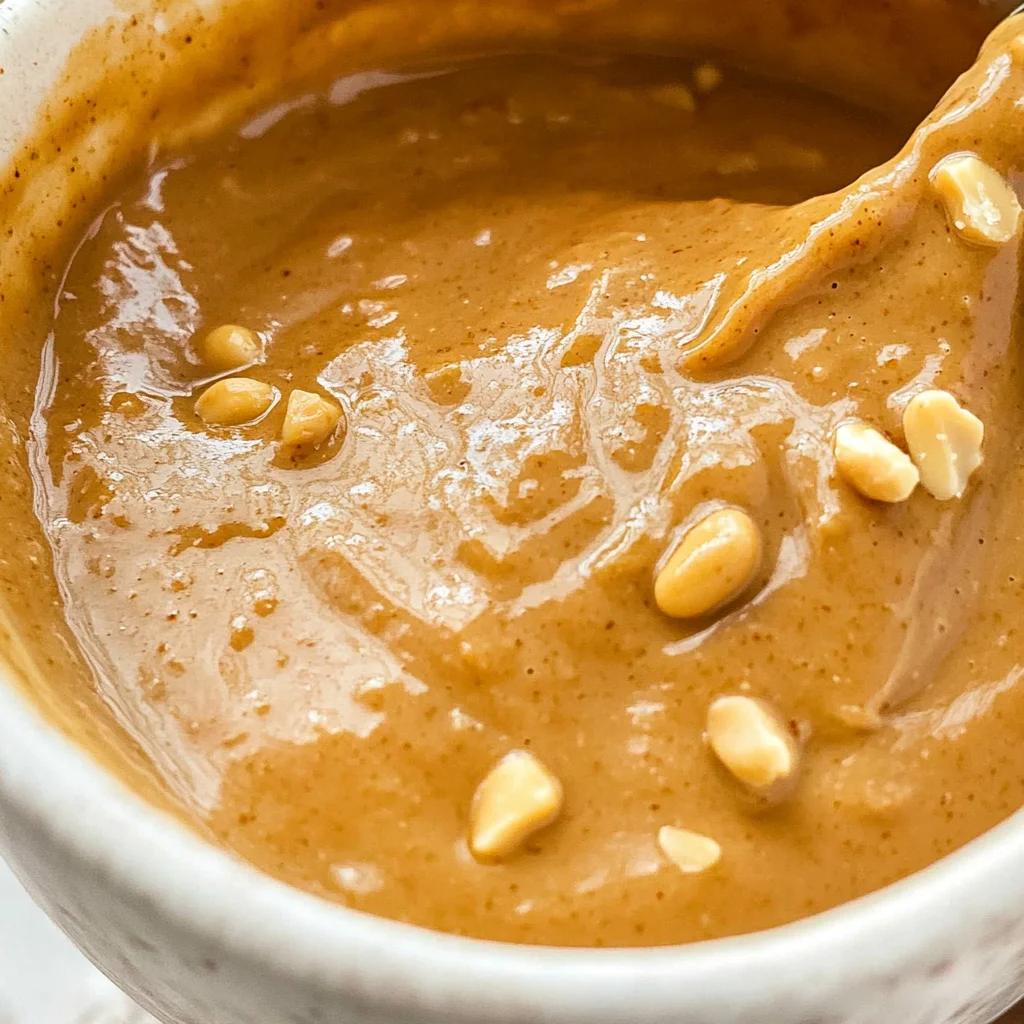
Ingredients
To create this delicious Peanut Sauce, gather the following ingredients:
For the Peanut Sauce
- 1 cup natural peanut butter
- 8 tablespoons soy sauce
- 4 tablespoons rice vinegar
- 1/2 teaspoon red pepper flakes (optional)
- 6 tablespoons brown sugar
- 2 teaspoons freshly grated ginger
- 1 clove garlic
- 4 teaspoons sesame oil
- 1/4 cup coconut milk
- 3 tablespoons water
How to Make Peanut Sauce
Step 1: Prepare the Base
- Add the pressed garlic and grated ginger to a clean jar.
Step 2: Combine Ingredients
- Add the rest of the sauce ingredients to the jar.
- Put the lid on tightly and shake well until combined.
- For an even smoother texture, blend with an immersion blender or food processor.
Step 3: Store the Sauce
- Store in the fridge until ready to use.
Step 4: Serve
- Enjoy your homemade peanut sauce with fresh spring rolls, noodles, or as a dressing on salads.
With just a few simple steps, you can have this amazing Peanut Sauce ready to enhance your meals!
How to Serve Peanut Sauce
Peanut sauce is a versatile condiment that can elevate many dishes. Its creamy texture and bold flavors make it a perfect addition to various meals, snacks, and appetizers.
With Fresh Spring Rolls
- Fresh spring rolls filled with vegetables or shrimp are complemented perfectly by peanut sauce. The sauce adds a rich flavor that balances the freshness of the rolls.
Over Noodles
- Drizzle peanut sauce over warm noodles for a quick and satisfying meal. Toss with some sautéed vegetables for an even more filling dish.
As a Salad Dressing
- Use peanut sauce as a salad dressing to add creaminess and depth. It pairs especially well with crunchy salads featuring carrots, cucumbers, and bell peppers.
For Dipping Veggies
- Serve peanut sauce as a dip for fresh vegetables like carrots, cucumbers, and bell peppers. This makes for a nutritious snack or appetizer that everyone will love.
In Grain Bowls
- Add peanut sauce to grain bowls filled with quinoa, rice, or farro. Top with your choice of protein and veggies for a hearty meal.
How to Perfect Peanut Sauce
Creating the ideal peanut sauce requires attention to detail. Here are some tips to ensure your sauce is always delicious.
-
Adjust the Consistency: If your peanut sauce is too thick, add water gradually until you reach your desired consistency. A smooth texture will make it easier to drizzle or dip.
-
Balance the Flavors: Taste your peanut sauce and adjust sweetness or saltiness by adding more brown sugar or soy sauce as needed. Achieving balance is key to enhancing flavor.
-
Experiment with Spice: For those who enjoy heat, increase the amount of red pepper flakes. Start small and add more gradually until you achieve your preferred spice level.
-
Use Fresh Ingredients: Always use freshly grated ginger and garlic for the best flavor in your peanut sauce. Fresh ingredients make a noticeable difference in taste.
Best Side Dishes for Peanut Sauce
Peanut sauce pairs wonderfully with many side dishes, complementing flavors and textures beautifully. Here are some great options.
-
Crispy Tofu Bites: Marinated tofu cubes fried until golden brown provide a protein-packed side that contrasts nicely with the creaminess of the sauce.
-
Vegetable Stir-Fry: A colorful array of stir-fried vegetables tossed in peanut sauce brings freshness and crunch to your meal.
-
Cucumber Salad: A refreshing cucumber salad dressed in vinegar provides a light contrast to rich peanut sauce, making it an excellent accompaniment.
-
Thai Fried Rice: Prepare fragrant fried rice loaded with vegetables and serve alongside peanut sauce for an added layer of flavor.
-
Grilled Chicken Skewers: Juicy grilled chicken drizzled with peanut sauce creates a savory dish perfect for summer gatherings.
-
Roasted Sweet Potatoes: The natural sweetness of roasted sweet potatoes pairs beautifully with the nutty flavors of peanut sauce, creating a delightful combination.
Common Mistakes to Avoid
Making peanut sauce can be simple, but there are a few common pitfalls. Here are some mistakes to watch out for:
- Ignoring ingredient quality: Using low-quality peanut butter can affect the flavor. Always choose natural peanut butter for the best taste.
- Not measuring accurately: Adding too much or too little of an ingredient can throw off the balance. Use measuring spoons and cups for precision.
- Skipping the blending step: Not blending or shaking well can leave clumps in your sauce. Ensure you mix thoroughly for a creamy texture.
- Overlooking flavor adjustments: The sauce may need more sweetness or acidity based on personal preference. Taste as you go and adjust accordingly.
- Neglecting storage tips: Storing peanut sauce improperly can lead to spoilage. Keep it in an airtight container in the fridge.
Storage & Reheating Instructions
Refrigerator Storage
- Store in an airtight container: This prevents contamination and keeps the sauce fresh.
- Best used within one week: For optimal flavor, consume within 7 days of making it.
Freezing Peanut Sauce
- Use freezer-safe containers: Make sure your containers can withstand freezing temperatures.
- Can last up to three months: Label containers with dates to track freshness.
Reheating Peanut Sauce
- Oven: Preheat to 350°F (175°C) and place sauce in an oven-safe dish covered with foil to prevent drying out.
- Microwave: Heat in short intervals (15-20 seconds), stirring in between to ensure even warming.
- Stovetop: Warm over low heat, stirring continuously until heated through, adding water if necessary for consistency.
Frequently Asked Questions
Here are some frequently asked questions about peanut sauce:
What is Peanut Sauce?
Peanut sauce is a creamy condiment made primarily from peanut butter mixed with soy sauce, vinegar, and spices. It’s popular in various Asian cuisines.
How do I make Peanut Sauce gluten-free?
To make peanut sauce gluten-free, simply use tamari instead of regular soy sauce. Tamari is a gluten-free alternative that maintains the same rich flavor.
Can I customize my Peanut Sauce recipe?
Absolutely! You can adjust ingredients like sweetness by varying the amount of brown sugar or add more spice with additional red pepper flakes.
What dishes pair well with Peanut Sauce?
Peanut sauce pairs wonderfully with fresh spring rolls, salads, grilled meats, and noodles, enhancing each dish’s flavor profile.
How long does homemade Peanut Sauce last?
Homemade peanut sauce lasts about one week when stored properly in the refrigerator. It can also be frozen for up to three months.
Final Thoughts
This Peanut Sauce recipe is not only delicious but incredibly versatile. Perfect as a dipping sauce or drizzled over salads and noodles, it can be easily customized to suit your taste preferences. Don’t hesitate to give this creamy delight a try!
Peanut Sauce
- Total Time: 5 minutes
- Yield: Approximately 8 servings (2 tablespoons each) 1x
Description
This Peanut Sauce recipe is a creamy, flavorful delight that brings versatility to your meals! Ready in just five minutes, it features a blend of natural peanut butter, soy sauce, rice vinegar, and aromatic spices like ginger and garlic. Perfect for drizzling over warm noodles, tossing into fresh salads, or serving as a dip for crunchy vegetables or spring rolls, this sauce will elevate your dining experience effortlessly. Plus, it’s customizable—add more spice if you like heat! Enjoy the richness of this nutty dressing that caters to all tastes.
Ingredients
- 1 cup natural peanut butter
- 8 tablespoons soy sauce
- 4 tablespoons rice vinegar
- 1/2 teaspoon red pepper flakes (optional)
- 6 tablespoons brown sugar
- 2 teaspoons freshly grated ginger
- 1 clove garlic
- 4 teaspoons sesame oil
- 1/4 cup coconut milk
- 3 tablespoons water
Instructions
- In a clean jar, add pressed garlic and freshly grated ginger.
- Add the remaining ingredients: peanut butter, soy sauce, rice vinegar, brown sugar, red pepper flakes (if using), sesame oil, coconut milk, and water.
- Secure the lid tightly and shake vigorously until well combined. For an ultra-smooth texture, blend with an immersion blender or food processor.
- Store in the fridge until ready to use and enjoy it with your favorite dishes.
- Prep Time: 5 minutes
- Cook Time: 0 minutes
- Category: Condiment
- Method: Mixing
- Cuisine: Asian
Nutrition
- Serving Size: 2 tablespoons
- Calories: 180
- Sugar: 6g
- Sodium: 600mg
- Fat: 13g
- Saturated Fat: 3g
- Unsaturated Fat: 9g
- Trans Fat: 0g
- Carbohydrates: 12g
- Fiber: 2g
- Protein: 5g
- Cholesterol: 0mg